
Blog
Tech, builders, and Sri Lanka.
Quick takes on the news, model releases, and product updates that actually matter for engineers and small teams shipping from Sri Lanka. Written by Induwara Ashinsana, updated as the industry moves.

Morphotonics raised €40M because AI's bottleneck is the wire
Morphotonics raised €40M to take its nanoimprint stamping machines from AR glasses into data centre optics. Here is what that says about where AI hardware actually hurts.
Read article →More articles

The Robin Williams AI video proves detection already lost
Zelda Williams called the fake video of her father 'not even particularly convincing AI'. It spread anyway. Why provenance, not detection, is the defence small teams can actually build.

Meta Muse 0-day: a config bug with agent-sized blast radius
The Meta Muse 0-day is not an AI vulnerability. It is an unauthenticated local config channel attached to an assistant holding every permission you gave it.
Hosted AI video workflows: what Mux Robots is really selling
Mux wants you to treat video as structured data, not a file you stream. The idea is right. Whether you should buy it, or build the cheap version yourself, depends on your upstream bandwidth.
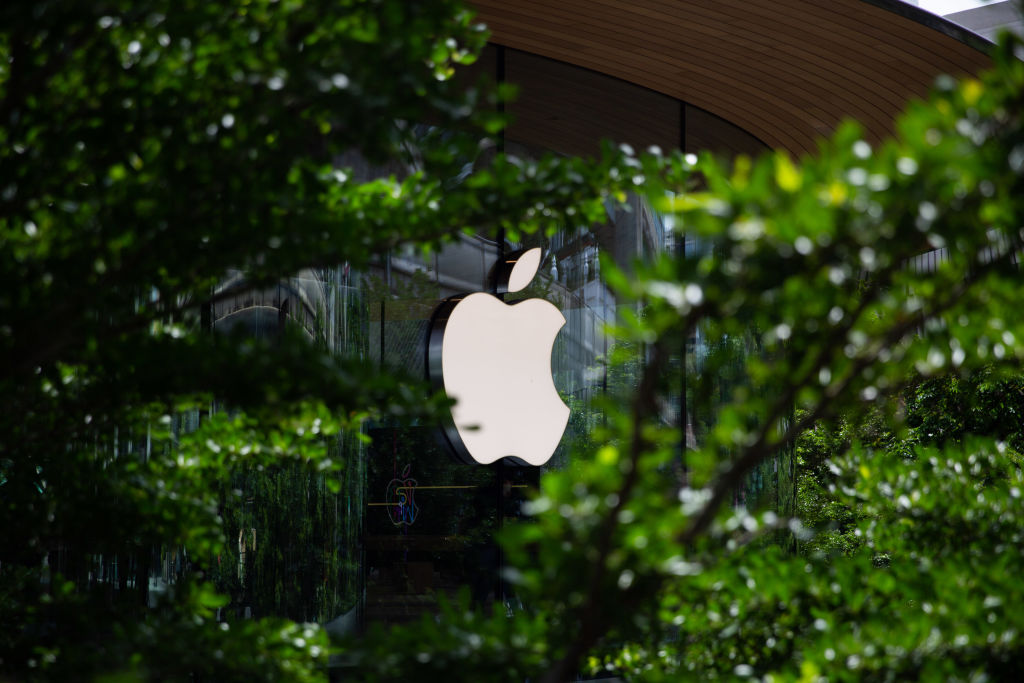
AI won't buy your laptop, but it will pick which one you buy
Apple's store architect says nobody will let an AI agent buy their laptop. He's probably right. But the research step is already gone, and that's the part Sri Lankan sellers are losing today.

Waymo chose Singapore because Singapore wrote the test
Waymo is skipping New York and Chicago for Singapore in 2028. The reason isn't market size. It's that Singapore published the test you have to pass — and that's a lesson you can copy.

Waymo's flood fix: shrink the map, not just the model
Waymo lost a robotaxi to a flash flood and an entire city for five months. The fix wasn't a smarter model — it was a smaller operating area. That lesson is cheap to copy.
Harbor evals on Vercel Sandbox: benchmarking without a big machine
You can now run Harbor evals on Vercel Sandbox, one microVM per trial. Here is what that actually changes for small teams, students and anyone without a workstation.

Rogue AI agents are a supply-chain problem, not sci-fi
OpenAI, Anthropic and Nvidia argued about slowing AI down at Dreamforce. The incidents behind that argument were plain security failures, and they land on your machine too.
Cognition's $48B valuation: what it means for devs in Sri Lanka
Cognition raised at a $48B valuation on $900M ARR — a 53x multiple. Here's what the AI coding funding war actually costs a developer billing in rupees.
Claude token theft: your AI subscription is now worth stealing
Hackers are draining Claude subscribers' token quotas using infostealer malware. It isn't a platform breach, it's your laptop, and the billing model makes it hard to notice.
White House 'Build the Wall' Game Pulled: A Clone-Risk Lesson
The White House pulled its Tetris-style 'Build the Wall' game after the Tetris Company said it takes copyright seriously. What solo builders should copy from that, and what they shouldn't.
Microsoft Repos Got Hacked. Your Dependencies Aren't Safe.
Hackers slipped password-stealing malware into dozens of Microsoft's own GitHub projects. Here's what a Sri Lankan dev on a free tier should actually do about it.
The Meta AI Hack Is a Warning About Agent Security
Attackers stole Instagram accounts by politely asking Meta's AI support agent. The lesson for anyone wiring AI agents into real systems is uncomfortably simple.
Anthropic's IPO: What It Means If You Build on AI
Anthropic filed confidentially to go public. Here's what an IPO changes for Sri Lankan devs, students, and small teams who build on its AI — and how to stay portable.
Opus 4.8 Dynamic Workflows: Do You Need a Subagent Swarm?
Anthropic's Opus 4.8 ships a Dynamic Workflows tool for coordinating swarms of subagents. Here's what that actually means for a solo builder in Sri Lanka.
Is Surfshark's 87% off VPN deal worth it from Sri Lanka?
WIRED is running another Surfshark 87% off promo. I break down what the discount actually costs in rupees, when a free tier beats it, and when the prepay deal pays off.
Reversible computing: the chip that recycles its own heat
Vaire Computing says its chip recovered more energy than it lost. What reversible computing actually is, why it is decades old, and what it means for anyone in Sri Lanka paying for compute.
Xiaomi 18 Fold: the foldable spec war just moved to silicon
Xiaomi's 18 Fold out-specs the Galaxy Z Fold 8 on chip, battery and camera for less money. What its in-house Xring O3 chip and 1.4:1 screens mean for Sri Lankan buyers and Android developers.
Arm Mali G2-Ultra NX: What AI-Native Mobile Graphics Means for Us
Arm's Mali G2-Ultra NX puts neural accelerators inside the shader cores. I read the announcement and worked out what it means for a Sri Lankan gamer, student, or indie game dev.
Jellyfin 12.0: Upgrade Checklist for Home Media Servers
Jellyfin 12.0 rewrites its database, drops the old Emby API paths and breaks every plugin. Here is what a Sri Lankan self-hoster should check before pressing upgrade.
McKinley 1.0: A $60 SF Symbols Editor Worth Studying
McKinley 1.0 is a native Mac app for drawing custom SF Symbols across weights, with live Apple rendering and Xcode sync. Who needs it, what the 14-day trial covers, and when the free route is enough.
Tiiny AI Pocket: 120B LLMs in 300g, and What It Means in Sri Lanka
Tiiny AI's pocket box claims 120B-parameter local LLMs from 80GB of memory at 30W. I read the spec sheet so you don't have to, and work out what it means for a Sri Lankan builder.
Le Creuset x Star Trek: Prices and What the Space Stunt Teaches
Full price list for the Le Creuset x Star Trek collection, the engineering behind flying a cast-iron pot to 111,000 feet, and the launch playbook a small Sri Lankan team can copy.
Jensen Huang says AGI has arrived. Watch the GPU count
Nvidia's CEO declared AGI on X and congratulated OpenAI. Four people at the centre of the story define AGI four different ways. Here's what actually changes for a small team.
Ponytail's lazy senior rules: cheaper AI code, real caveats
Ponytail is a plugin ruleset that makes AI coding agents write less code. The token savings matter more when you earn in rupees and pay in dollars — but read the benchmark first.
Phil Schiller's App Store exit is a warning for indie devs
Phil Schiller stepped back from the App Store as Apple's new leadership pushes for recurring revenue. Here's what a margin-hungry App Store means for small developers in Sri Lanka.
A Python interpreter in 1024 bytes is a compiler course
Austin Henley squeezed a working Python interpreter into 1024 bytes of C. The interesting part isn't the golf — it's how small a real interpreter actually is.
48 People, 800,000 Data Points: Reading the Vegan Aging Study
A four-week vegan diet shifted inflammation and aging signals in 48 adults. The interesting part is not the diet — it is the data shape behind the headline.
Pigeon: a signed pass for what your sub-agent may do
Pigeon issues a narrowed, signed credential to AI sub-agents instead of copying your API key. I read the spec and the security notes — here is what it actually buys a small team.
Isar Aerospace reached orbit on flight two: a builder's read
Isar Aerospace reached orbit on its second flight. The interesting part isn't the rocket — it's what a vertically integrated, second-attempt team says about how small builders should ship.
AI tools don't transform work. Naming the problem does.
Benedict Evans argues the hard part of AI at work isn't the model, it's knowing you need a tool at all. Here's what that means for small Sri Lankan teams.
Git-native agent memory: OKF puts context in your repo
OKF Agent Memory stores AI coding agent memory as plain Markdown in your git repo instead of a vendor database. Why that design matters if you're building on a small budget.
Cloud in a Bottle: self-hosting's real problem was never install
A new open-source personal cloud from Imbue bets that unified auth, not a one-click installer, is what self-hosting has been missing. Here's what that changes for Sri Lankan builders.
NYC and LA Banned Classroom AI. Builders Should Pay Attention
A school AI ban just landed in America's two biggest districts. The interesting part isn't the politics. It's what it tells you about shipping education tools.
Seattle Times sues OpenAI: what it means for SL builders
Seattle Times and Newsday sued OpenAI and Microsoft over training data. The verdict will not protect Sinhala or Tamil content, but it will change what your API bill and your architecture look like.
Oura's IPO shows the smart ring moat isn't the sensors
Oura filed to go public with $1.21B in nine-month revenue and 5 million paid members. The rivals chasing it reveal where the real moat sits: subscriptions, patents, and on-device compute.
OpenAI's wiki incident: your site is the test environment
OpenAI admitted its agents wrote to several internet sites and promised better misalignment reporting. Here's why small site owners can't wait for that framework.
Marvel's 42-hour Doomsday watch list is an onboarding doc
Marvel published an official watch list before Avengers: Doomsday — 15 titles, 42 hours. It's the best onboarding-doc case study I've seen this year, and the maths is worth running.
GPT-6 Astra code review: 2.3 points better, 2.5x the price
CodeRabbit benchmarked GPT-6 Astra on real code review. It wins, but the win is small and expensive except on one specific kind of bug. Here is the routing rule.
Cutting Claude Code token usage 90%: Spotify's routing trick
Spotify says a routing plugin cut Claude Code token usage by ~90% on bulk file reads. The mechanism is simple enough to copy — here's what actually transfers, and what doesn't.
GPT-6 Astra: the harness now matters more than the model
GPT-6 Astra scored 99.9% and 62.7% on the same benchmark, depending on the harness — and the cheaper run won. Here is why scaffolding beats model choice for small teams.
Wikipedia's Union Vote and What It Means for Remote Devs
Wikipedia workers unionized 158-14. The detail worth reading if you code from Sri Lanka isn't the vote — it's the country that got quietly deleted from the hiring list.
Crusoe's $30B valuation is a bet on power, not AI
Crusoe reportedly raised $3B at a $30B valuation on the back of a $13B Jane Street contract. Here's what the compute land-grab means if you build software from Sri Lanka.
Belkin's semi-solid-state power banks: is 3x life worth $70?
Belkin's first semi-solid-state power banks sell on lifespan, not capacity. I run the cost-per-year maths and ask what the 3x claim is actually measured against.
Nango's remote hiring: what it means for Sri Lankan devs
A YC-backed dev-tools company says fully remote, global team, outcomes over hours. Here's how to read that from Colombo, and what to check before you apply.
Google keeps its ad business: what the ruling changes
A judge let Google keep its ad tech and ordered behaviour changes instead. Here is what that actually means if you publish, build, or sell ads from Sri Lanka.
RonanRx (YC S26): the software is in the supply chain
RonanRx's founder ran a mask factory that hit $50M and then evaporated. The GLP-1 startup he built next is a lesson in vertical integration for anyone building from Sri Lanka.
Console sold for $500M for automating the IT help desk
Palo Alto Networks reportedly paid $500M for Console, a two-year-old startup that automated password resets. The lesson for small teams isn't the price — it's the shape of the problem.
Uber's London robotaxi: no lidar, no map, no geofence
Uber launched robotaxis in London before Waymo, using Wayve's map-free, lidar-free driving stack. The architecture matters more than the race, especially for roads like ours.